
March 19, 2026
By Natalie Tseng, Student Life
Student Life's Junk Journal
I was angry during my second year at U-M.
Angry because my health was taken from me. I was forced to take a semester off. My hair was falling out during chemotherapy. I could not recognize my own face.
I didn’t do much about this anger. I feared appearing weak or pessimistic, even though I had every right to be.
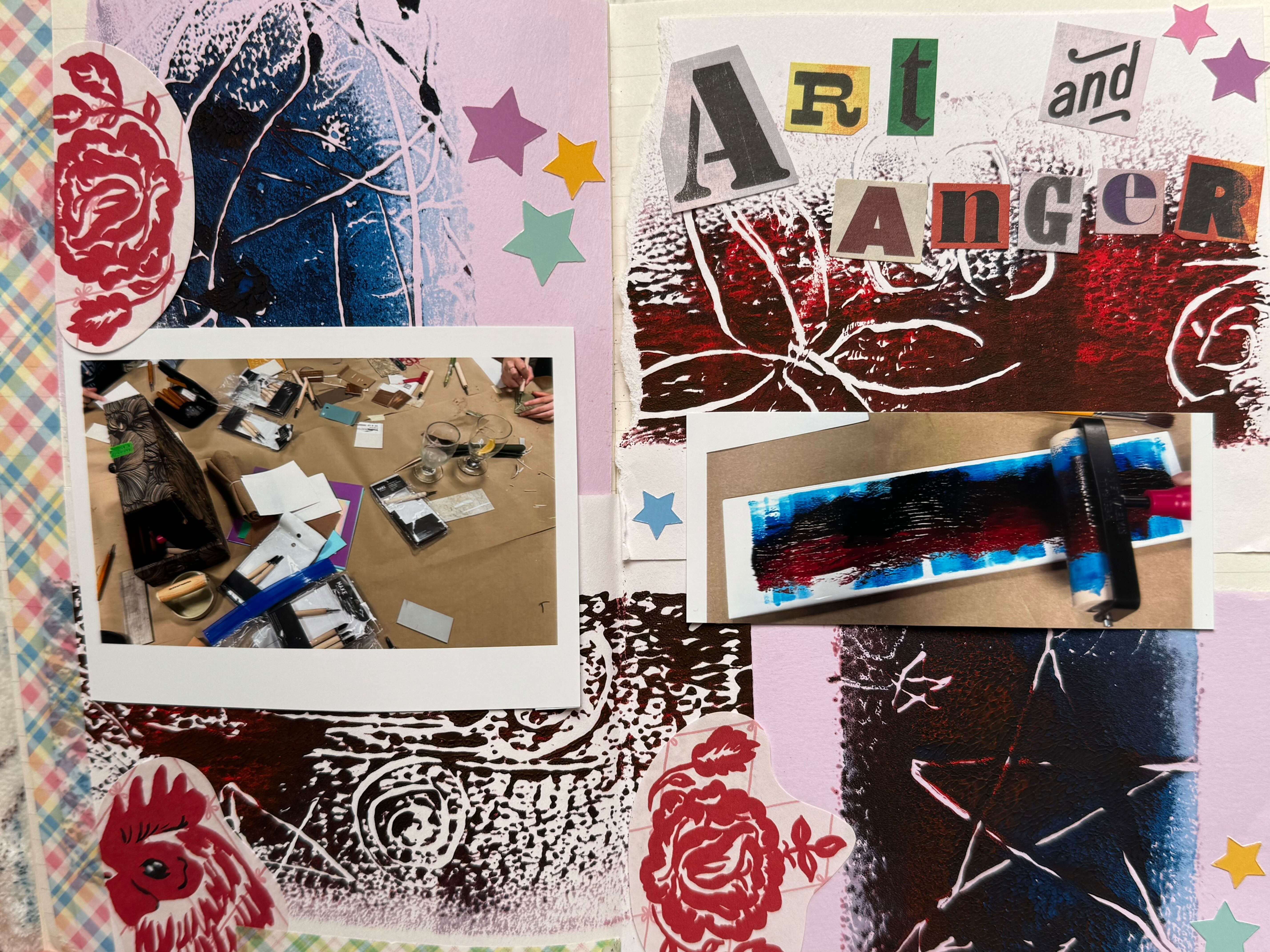
If you’ve been following the Student Life Junk Journal blog, you’ve seen my experience through campus events, where I collect “scraps” to preserve the small moments that form lasting memories within the U-M student body. The project was inspired by my own junk journals, which I began during the hardest period of my life.
Creating something with my hands gave me an outlet when emotions felt overwhelming. Pasting scraps down and forming collages that didn’t always make sense became a way to process what I was feeling.
As I sat down at the Don't Discard, Develop: An Arts and Anger Exploration event, I found myself thinking back to that time.
The event, presented by Student Life Sustainability Cultural Organizers, invited students to explore what makes them angry and how they respond to those feelings. Through art and conversation, we reflected on what it means to develop anger rather than discard it.
For me, I thought about how I once processed emotions this way alone—and how meaningful it can be to explore them with others, in a space that says anger is a part of being human.
As a generally positive person, I find it difficult to be angry. It feels like I’m acting against my character. I am the type of person who searches for the silver lining.
This workshop made me realize that developing anger, rather than disregarding it, is healthier than suppressing it or forcing that feeling to become something it’s not.
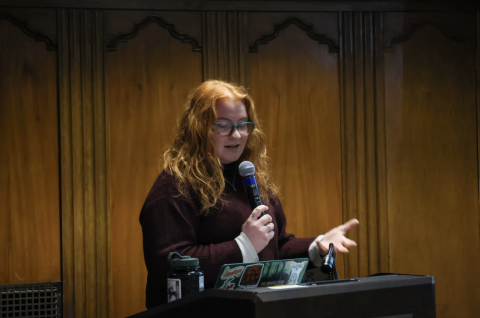
BJ, the event organizer and keynote speaker, encouraged conversation amongst table groups asking us to reflect: What makes people mad? Who gets to be mad?
As I reflected, I knew what I wanted to say: it angers me when people take their health for granted. During my semester off at home, I came across a phrase on Substack that still stays with me: good health is the crown that the healthy wear but only the sick see. As the thought formed, my throat tightened. I hesitated.
Once my nerves subsided, I shared instead that my anger often coincides with sadness, and it can be difficult to separate the two.
“I understand,” a table-mate said, nodding. “Whenever I get angry, it quickly turns to sadness. Then I feel angry that I am sad. It’s an awful cycle. I’ve found that talking to someone makes it easier for me.”
The room got a little lighter. A small reminder that these feelings weren’t mine alone.
We continued to converse as a table about things that made us mad: the political climate, lack of accountability, the decline of empathy. We used these frustrations to create art.
I worked at the table with monotyping materials, a form of printmaking where an artist applies paint to a smooth surface and transfers a design to paper. It allows for experimentation and uninhibited creativity.
“As a perfectionist, I usually don’t turn to art,” another student told me as we monotyped, “but I do appreciate how I don’t have to overthink anything. I’m just able to develop what feels right.”
Art offers that kind of freedom and accessibility. There’s no correct answer or perfect outcome, just whatever shows up on the page. It feels right even when the feeling behind it is anger.
“Discomfort is the best thing to experience because it teaches you things about yourself and others,” said BJ. “The only way to make positive change in the world is to sit with discomfort and work through it.”
The feeling that monotyping gave me reminded me of my early junk journal spreads. Both gave me a way to channel my anger and release frustration without needing the result to make perfect sense.
I walked away from this experience with two reminders:
- I am grateful for all of my emotions, they make me human, and
- creative expression reveals things about ourselves we might miss.
If I could go back in time, I would tell myself that it was OK to be mad.
To be continued in scraps and stickers,
Natalie