
Building an inclusive, welcoming campus
The Spiritual, Secular, Religious and Interfaith initiative aims to build an inclusive, welcoming campus environment where you can freely explore, practice and share your beliefs. Through our programs, resources and partnerships, we promote the pursuit of a pluralistic community, providing both individual and collective support.
Our values and beliefs shape the way we see and interact with the world around us. For many in our community, these beliefs are core to who we are.
They are a point of connection and an opportunity to learn more, both about ourselves and others.
Launched in Fall 2023 and housed within the Division of Student Life, this initiative serves as a hub for your spiritual and religious care and well-being.
We're here to make it easier to find programs, places and people that can help you deepen your existing religious, spiritual or secular identity—or explore new ones.
Get Connected
Interested in learning more about Religious, Secular and Spiritual Life at U-M?
Email Kelly Dunlop.
Meet our Team
Kelly Dunlop, MSW, MA (she, her)
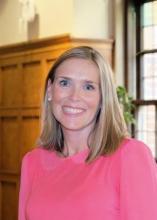
Kelly brings nearly two decades of student affairs experience to her role as Religious, Secular, Spiritual, and Interfaith Engagement Lead at U-M. Continuing her tenure from her previous role as Associate Director for the Center for Campus Involvement, Kelly focuses on building inclusive communities and fostering dialogue across diverse belief systems. She has led initiatives that cultivate belonging, strengthen partnerships, and support over 1,500 student organizations.
A former campus minister and community organizer, Kelly is known for meeting people where they are, listening deeply, and building collaborations that drive systemic change.
Marisa Quiery (she, her)
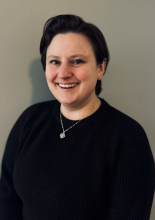
Marisa brings a strong foundation in social work, community engagement, and interfaith leadership to her role as Program Manager for RSSL. A proud U-M alum, she earned her Master of Social Work from the School of Social Work, building on undergraduate studies at the College of Wooster.
Shaped by experience across clinical, pastoral, and nonprofit settings, Marisa is committed to cultivating spaces of belonging, spiritual care, and courageous dialogue. She serves on the Board of Directors for the nonprofit CoCoDa, supporting sustainable community development partnerships in Central America, and is currently pursuing a Master of Divinity to further integrate pastoral imagination, theological reflection, and social justice into her leadership.
Farhia Mohamed (she/her)
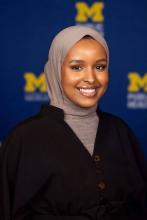
Farhia is an MPH student in Nutritional Sciences at the University of Michigan School of Public Health. Rooted in her Muslim faith, she’s guided by values of service, justice, and compassion.
Through her work with Religious, Secular, and Spiritual Life, she’s deepened her appreciation for inclusive community-building and believes interfaith work means creating spaces where everyone feels seen, valued, and empowered to lead—regardless of belief.
Campus Partners
We work alongside campus partners, local faith communities and interfaith networks to strengthen spiritual care, dialogue and belonging at U-M.
Steering Committee
Religious, Secular and Spiritual Life is guided by a steering committee made up of members from across the university, including students, faculty, and staff.
Together, the committee helps advance the goals of:
- Expanding opportunities for students, staff, and faculty to engage with diverse worldviews
- Strengthening teaching, research, and scholarship related to religion
- Increasing awareness of and access to religious accommodations and campus spaces
Michigan Interfaith in Action
The first and only student-led organization at the University of Michigan dedicated to fostering interfaith knowledge, awareness and appreciation.
Follow Michigan Interfaith in Action on Instagram to learn more.
Additional partners
- The Association of Religious Counselors (ARC), an independent association that brings together a diverse group of volunteers across religious and spiritual communities to support the UM-Ann Arbor campus.
- The Raoul Wallenberg Institute fosters the values embodied by Raoul Wallenberg—empathy, tolerance, courage, and leadership—by studying hatred directed against religious and ethnic communities, fostering cross-cultural understanding, and elevating civic discourse.
- Interfaith Roundtable of Washtenaw County, a local organization that works to build meaningful relationships among people of diverse religious and spiritual backgrounds and journeys.